Epidemiology of Drug Use and Drug Problems
Part 3. Longitudinal Trends
Trends in Marijuana and Cocaine Use
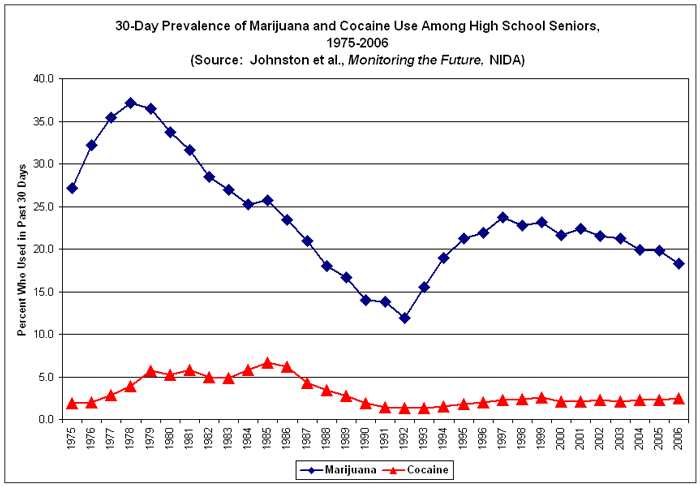
The Monitoring the Future (MTF) project has been collecting prevalence data on alcohol and drug use among high-school seniors since 1975, thereby providing a unique resource for longitudinal analysis of trends in the epidemiology of drug-related deviance. The following graph shows the somewhat different longitudinal patterns for the thirty-day prevalence of marijuana use versus cocaine use among high-school seniors. On the one hand, marijuana use peaked in 1978, when slightly more than 37 percent of seniors used within the past month. Then, the thirty-day prevalence of marijuana use declined steadily until 1992, when it reached a low point 11.9 percent. After a substantial increase in the early 1990s, the thirty-day prevalence of marijuana use has decreased somewhat over the past decade.
The thirty-day prevalence of cocaine use also increased during the late 1970s, and, then, it leveled off at approximately 5-6 percent until the mid-1980s. During the late 1980s, the monthly prevalence of cocaine use dropped dramatically to a low of 1.3 percent in 1992 and 1993. Since then, the prevalence of cocaine use has remained fairly steady at slightly more than 2 percent of seniors using within the past thirty days. As we will see later, these longitudinal trends contrast markedly with claims about drug "epidemics" and "plagues" that appeared in the mass media during the historical period covered by these epidemiological data.
Increasing Use of Synthetic Narcotics
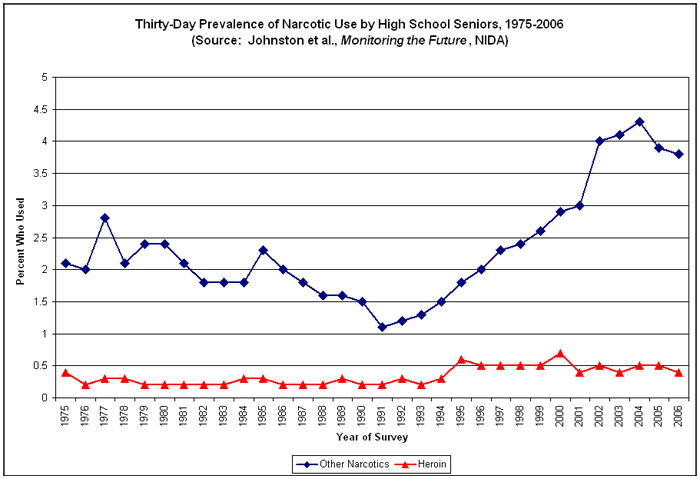
In contrast to relatively stable patterns of use for marijuana, cocaine, heroin (shown below) and many other illegal drugs over the past decade, the thirty-day prevalence of "other narcotic use" by high school seniors has increased markedly since the early 1990s. "Other Narcotics" include opiate-type (or "opioid") prescription drugs such as codeine and Demerol when used outside of medical supervision. In 2002 several new drugs, including OxyContin (Oxycodone) and Vicodin (Hydrocodone), were added to the list of other narcotics in the MTF survey, which accounts in part for a sharp jump in thirty-day prevalence between 2001 and 2002. Overall, monthly prevalence estimates for the use of other narcotics have quadrupled since 1991, and non-medical use of these addictive drugs now ranks fourth in prevalence among high-school seniors behind the use of alcohol, tobacco, and marijuana.