Epidemiology of Drug Use and Drug Problems
Part 4. National Survey on Drug Use and Health
Drug Use in the General U.S. Population
Although the Monitoring the Future Project is the best source of epidemiological data on adolescents, it is limited by the age range it covers and by the exclusion of students not attending school. The most comprehensive source of epidemiological data on alcohol and drug use among both young people and adults is the National Survey on Drug Use and Health (NSDUH). This is an annual survey of the civilian, noninstitutionalized population of the United States aged 12 years old or older that is based on face-to-face interviews in a representative sample of U.S. households. Prior to 2002, the survey was called the National Household Survey on Drug Abuse (NHSDA). Unfortunately, data from earlier years are no longer comparable to data collected since 2002 because of important changes in methodology. Most notably, respondents in the 2002-2006 NSDUH surveys, unlike earlier respondents, were paid $30 for their participation. This financial incentive improved the response rate for interviews and increased prevalence estimates for drug use. However, improvements like this came at the cost of comparability with earlier surveys.
The following graph presents results for men and women from the 2006 NSDUH survey, which completed usable interviews with 67,802 respondents, aged 12 and over. As is the case with the Monitoring the Future data, the prevalence rate for marijuana use in the past month is substantially higher than the rate for other substances. Men are almost twice as likely as women to have used marjuana in the past month (8.1% vs. 4.1%). This "gender gap" in illegal drug use is also apparent for cocaine, where men are more than twice as likely to use in the past month (1.4% vs. 0.6%). The drug category with the second highest prevalence among both men and women is "psychotherapeutics," which includes the non-medical use of a broad range of "prescription-type medications with legitimate medical uses as pain relievers, tranquilizers, stimulants, and sedatives." Some of the prescription-type drugs in this category—most importantly pain relievers like OxyContin and Vicodin—are also shown separately in this graph as well.
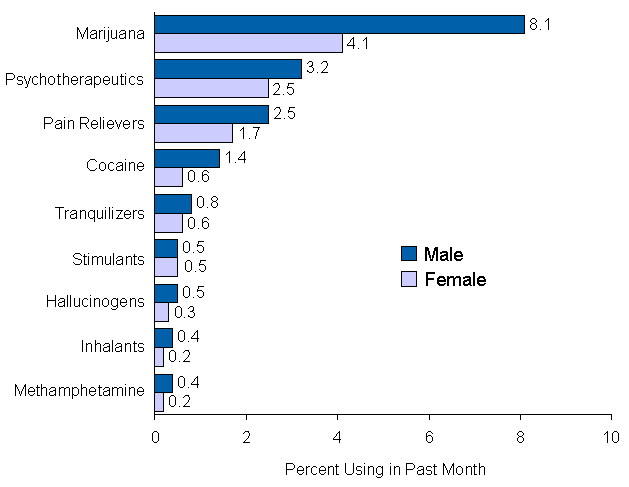
Past Month Use of Selected Drugs among Persons Aged 12 or Older, by Gender
Source: 2006 National Survey on Drug Use and Health
Age Distribution of Illegal Drug Use
The NSDUH provides useful epidemiological data on the prevalence of drug and alcohol use by age. As shown below, the past month prevalence of illegal drug use is relatively low at ages 12-13. However, drug use increases steadily through the teenage years until reaching a peak between the ages of 18 and 20, when almost a quarter of respondents (22.2 percent) report having used in the past month. Prevalence rates decline fairly rapidly among young adults in their 20s and, then, remain fairly stable from age 30 to age 44 at 8 to 10 percent. Following a slight decline in the late 40s and early 50s, the past month prevalence of Ilegal drug use drops below 3 percent after age 55.
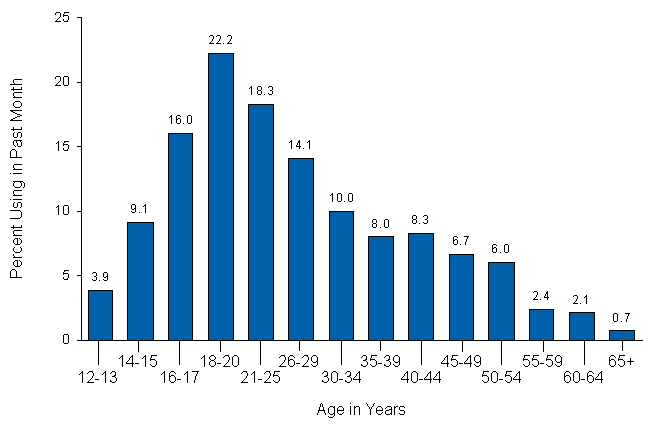
Past Month Illicit Drug Use among Persons Aged 12 or Older, by Age
Source: 2006 National Survey on Drug Use and Health
Incidence Estimates of New Drug Users
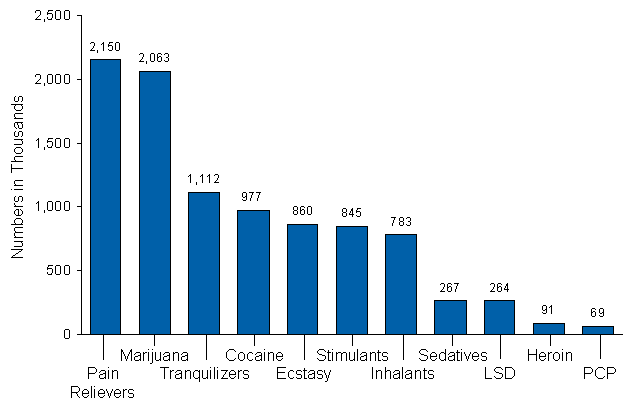
Another important feature of the NSDUH is collection of incidence data (as opposed to prevalence) on new users of illegal substances during the year prior to the survey. The graph below shows that initiation of non-medical use of pain relievers and marijuana use stand out with relatively high rates of incidence. In each case, the NSDUH estimates indicate that over two million people ages 12 and over started using these substances during the past year. Incidence data are often helpful in identifying emerging forms of illegal drug use, which appears especially to be the case with non-medical use of prescription narcotic pain relievers.